For readers 50 and over

The word was on the tip of your tongue — and then it wasn’t. Here’s what actually changes after 50, and the golden hour ritual old Mediterranean families never gave up.

Not a diagnosis. Not a miracle claim. Just a plain look at why recall gets slower with age, which everyday habits research keeps circling back to, and one small evening tradition from the honey country of the Aegean that costs almost nothing to try.

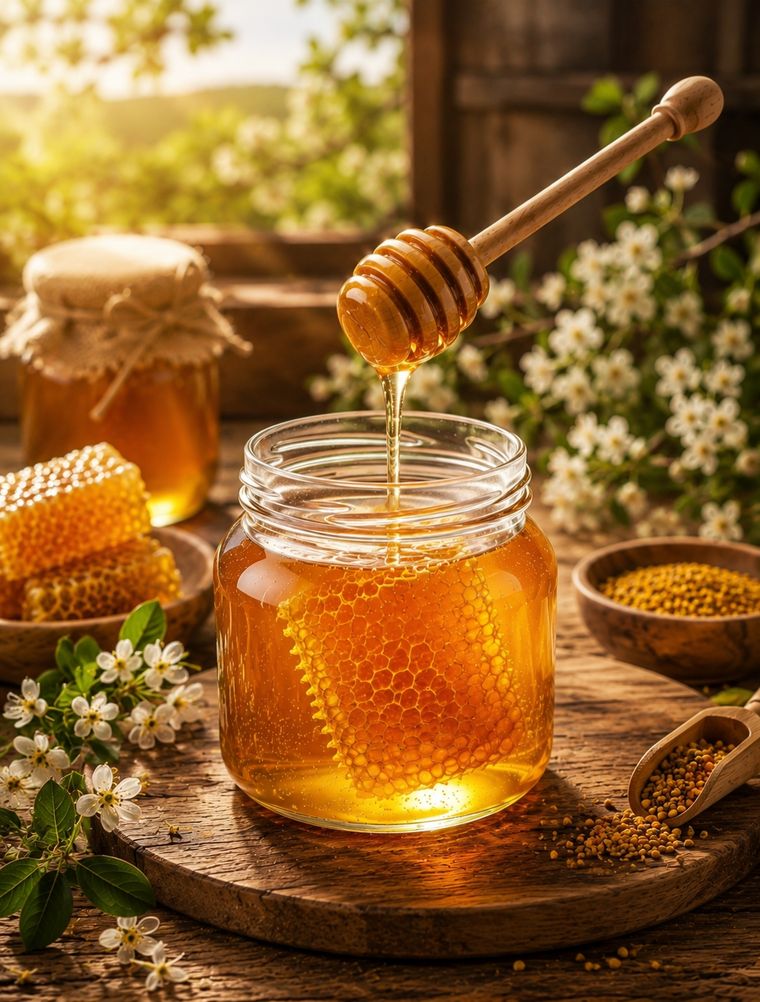
A glass jar of raw honey with a honeycomb inside, a wooden dipper drizzling honey, and a bowl of bee pollen on a rustic table at sunrisePlay the free presentation

Short video · Sound on · Best watched somewhere quiet

Watch the free presentationNo email required to watch
Educational contentNo prescriptions discussed4 minute read

The honest version

Why memory shifts after 50

Slower recall in your fifties and sixties is not a character flaw and it is not laziness. Four ordinary things change quietly in the background, and most of them have nothing to do with the brain itself.

One

Deep sleep gets shorter

The slow-wave stage of sleep — the part where the day’s events get filed away — shrinks steadily with age. Same eight hours in bed, less of the stage that does the filing. Waking twice a night to use the bathroom chops it up further.

Two

Circulation slows down

The brain is roughly two percent of your body weight and asks for about twenty percent of the blood you pump. As vessels stiffen and daily movement drops, delivery gets less generous. People often notice it first as a mid-afternoon fog rather than as forgetting.

Three

You absorb less of what you eat

Stomach acid production falls with age, and certain long-term medications reduce it further. The same plate of food delivers fewer of the B vitamins and minerals it used to. Nothing about the meal changed — the doorway did.

Four

Stress stops switching off

Retirement, caregiving, health worries and money all arrive in the same decade. Sustained stress hormones make the brain excellent at scanning for threats and noticeably worse at storing where you set the keys down.

Clearing the air

Three things people get wrong

Most of the fear around memory after 50 comes from repeating things that were never true in the first place.

Myth

“It’s age. There’s nothing you can do about it.”

Fact

Age is one input, not the whole equation. Sleep, movement, hearing, blood pressure, social contact and diet are all modifiable, and they are exactly the variables large observational studies keep pointing to. Nobody controls the calendar. Plenty of people control the inputs.

Myth

“Forgetting a name means something serious is starting.”

Fact

Losing a name and finding it an hour later is ordinary retrieval delay at any age. What deserves a doctor’s attention is a different pattern: repeating the same question in one conversation, getting lost on familiar streets, or trouble with steps you have done for decades. Pattern matters more than a single blank moment.

Myth

“Crosswords and brain games are enough on their own.”

Fact

Puzzles mostly make you better at puzzles. That is not nothing, but the habits that show up again and again in the research are duller: walking, sleeping properly, treating hearing loss, staying in conversation with other people, and eating in a broadly Mediterranean pattern.

A sequence, in order

The golden hour, in three steps

These run in order for a reason: the first two set up the conditions your brain consolidates in, and the third gives it something worth consolidating. The whole thing takes about twenty minutes and belongs to the last hour before bed.

1

Close the day down

One hour before bed, the overhead lights go off and the lamps come on. Screens go face down. In Aegean villages this was simply what happened when the sun went — there was nothing else to do — and it turns out to be the single easiest way to stop cutting into the deep sleep stage that files your memories.

60 minutes before bed · costs nothing
2

The spoonful

A spoon of raw, unfiltered honey stirred into warm water, sometimes with a strip of lemon peel or a few leaves of whatever grew near the house. It is a food, not a treatment, and that is precisely the point — it is a warm, sweet, unhurried signal that the day is finished. The ritual is doing at least as much work as the jar.

One spoon · warm, never boiling water
3

The recall loop

While the cup cools, walk back through the day out loud or on paper: three things that happened, in order, with the names of anyone you spoke to. Retrieving a memory on purpose is what strengthens the path back to it. Ninety seconds of this beats an hour of crosswords, and it is the step almost everyone skips.

90 seconds · names spoken out loud

Where it comes from

An old jar, a long-lived island

Honey is one of the oldest things humans have kept in a jar. Long before anyone measured anything, it sat on the shelf in Greek, Turkish and Sicilian kitchens for the same three reasons: it did not spoil, it made bitter things drinkable, and it closed the evening. Beekeepers in the Aegean still talk about their hives the way other people talk about a family orchard.

In the villages nobody described the evening spoonful as medicine. It was the last warm thing before the lamps went out.

Modern interest is more specific and more modest. Raw, minimally processed honey carries small amounts of plant polyphenols — the same broad family of compounds that gets studied in olive oil, berries and tea — and the Mediterranean eating pattern as a whole is among the most examined diets in the literature on healthy aging. That research is about patterns of eating and living over decades. It is not about any single jar, and it does not make honey a remedy for anything.

What has held up much better than any ingredient story is the shape of the evening those families kept: dim light, a warm drink, other people, an early night. It survived because it was pleasant, not because anyone was told to do it.

The part worth keeping

A habit only helps if you still do it in March. That is the quiet advantage of a ritual built around something that tastes good and takes twenty minutes — it survives the weeks when discipline does not. Choose the version you would happily repeat two hundred times, not the version that sounds most impressive.

Worth a conversation

Six signs that deserve a doctor’s ear

This is not a checklist you can score yourself on, and none of it diagnoses anything. It is simply the kind of change that is worth mentioning at your next appointment rather than filing away as “just getting older.”

The same question, twice in one hour

Not forgetting an answer, but not remembering that you already asked. Family usually notices this one first.

Familiar routes stop being familiar

A moment of genuine disorientation on a road you have driven for years, rather than missing a turn while distracted.

Steps you have done for decades

Trouble with the order of a long-practised task — a recipe, the bills, a tool you have used your whole working life.

Words go missing mid-sentence

Not the occasional tip-of-the-tongue pause, but conversations that stall often enough that you start avoiding them.

You are pulling out of things

Turning down invitations because keeping up with the room has become tiring. Withdrawal often shows up before anything else does.

Someone else brought it up

A spouse, a friend or an adult child mentioning a change you had not noticed. Outside observation is worth taking seriously.

Please read this part. Nothing on this page can tell you what is causing anything. Several very treatable things — thyroid levels, B12 status, sleep apnea, hearing loss, depression, and side effects of common prescriptions — can look like memory change from the outside. That is a conversation for a licensed healthcare professional, and it is worth having early rather than late.

What readers told us

Three evenings, three different houses

The accounts below are composites written from reader correspondence about the evening routine. They describe personal experience only.

I was reading the same page of the paper three times and blaming the paper. The lamps-off hour was the part I resisted and the part that changed my evenings. I go to bed earlier than I have in twenty years, and I stopped dreading the eight o’clock crash.

Composite account — man, 63 Retired, Ohio

My mother made the honey and warm water for us as children, so this felt like going home rather than starting a health kick. My husband started doing it with me, which is honestly why I am still doing it four months later.

Composite account — woman, 58 Teacher, North Carolina

The out-loud recall felt ridiculous for about a week. Then I caught myself remembering the name of a neighbour’s dog and I stopped feeling ridiculous. It costs me ninety seconds and it is the only part of my day that is quiet.

Composite account — man, 71 Retired, Arizona

Results disclaimer: These accounts are composites based on reader correspondence and are illustrative only. They are not endorsements, not clinical evidence, and not typical of any particular outcome. Individual results vary. Nothing described here is intended to diagnose, treat, cure or prevent any disease.

Before you ask

Questions people send us

Is this a treatment for memory loss?
No. This page is educational. It describes an evening routine and general lifestyle habits, and it is not intended to diagnose, treat, cure or prevent any disease. If you are worried about memory changes, that conversation belongs with a licensed healthcare professional.
Do I have to buy anything to do the three steps?
No. Dimming the lights, a warm drink and ninety seconds of recall cost nothing and require nothing you do not already own. Any honey from a shop you trust works for the second step.
Does the type of honey actually matter?
For the ritual, no. If you care about the plant compounds, raw and unfiltered honey retains more of them than heavily processed varieties, and very hot water is worth avoiding for the same reason. Honey is a food and it is still sugar — treat it as one spoon, not a serving.
I have diabetes or blood sugar concerns. Can I still do this?
Ask your doctor or pharmacist before adding honey to your evening, because it affects blood sugar the way other sugars do. The other two steps — the dim hour and the recall loop — involve no food at all, and a cup of herbal tea does the same job as the warm drink.
How long before this feels like it is doing anything?
We cannot promise a timeline and would not trust anyone who does. What people report first is usually about the evening itself — falling asleep more easily — rather than anything about recall. Treat it as a habit you are building, not a countdown.
Should I stop anything my doctor prescribed?
Absolutely not. Never start, stop or change a prescription based on something you read on the internet, including this page. Bring the question to the person who wrote the prescription.
How does this page make money?
It is sponsored content and it contains affiliate links. If you follow a link from this page and make a purchase, we may receive compensation from the advertiser at no additional cost to you. That relationship does not change what is written above, and nothing here is a recommendation to buy anything.

The presentation

The rest of the story is in the video

It walks through the same three steps in more detail, including the part of the evening routine that most people get backwards. It is free, it takes a few minutes, and no email is required to watch it.

Watch the free presentation now

Sound on · No email required

This is an advertisement. Educational content only — not medical advice.